
Finite Element Analysis (FEA)
SOLEM (Scalable Optimised Lightweight Electric Motor) endcap development, guided by finite element analysis through different component iterations to improve performance and manufacturability
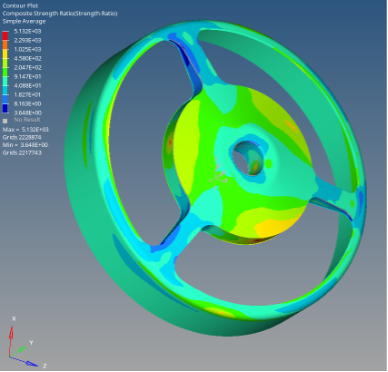
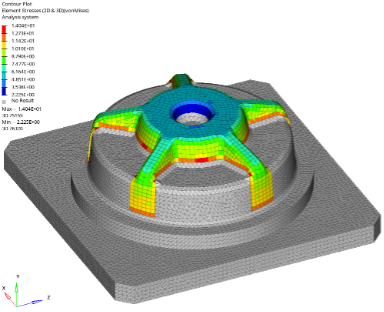
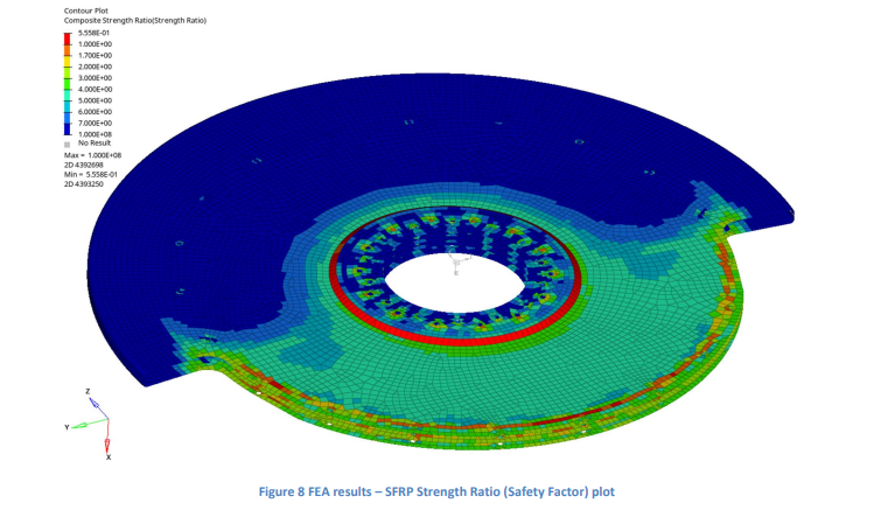
ESS Chopper Disk analysis
Physical testing is an expensive part of the design process. The time and cost involved in building and testing prototypes may restrict the number of iterations a particular design may go through. This may lead to missed opportunities for weight saving or design optimisation.
By incorporating finite element analyses into the design process, unnecessary rounds of physical testing may be eliminated while maintaining the scope to optimise a design. Additionally, finite element analyses can offer insight into behaviour such as delamination, debonding and fatigue crack growth which may be difficult or impossible to detect during physical tests. This information can help avoid expensive mistakes.
A finite element analysis should be tailored to a particular situation depending on the nature of the problem, the detail required in the solution and the time and computational resources available to solve it. Below is a summary of the main analysis techniques available to a composites designer, and common applications of each one.
Summary of analysis techniques
-
![]()
Linear Dynamics
Linear dynamics is an efficient technique based on superposition of modes of vibration of the system in question. It is a quick way of obtaining a solution when periodic loading must be modelled and deflections are small.
-
![]()
Buckling Prediction
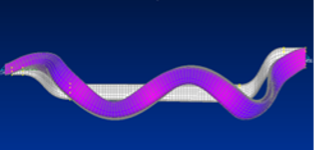
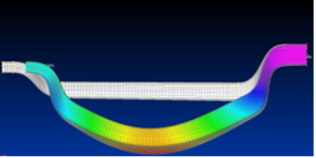
Buckling prediction is possible using Finite Element techniques. Conventional finite element methods would not solve problems such as buckling of an ideal column, so special techniques are required. An eigenvalue extraction is typically the first step.
-
![]()
Implicit Solution Methods
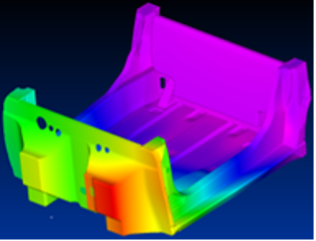
Implicit solution methods may be employed when the solution to a static problem is required. Typically such a solution may include the deflection of a structure due to an applied load, or a per ply failure index for a composite laminate.
-
![]()
Explicit Solution Methods
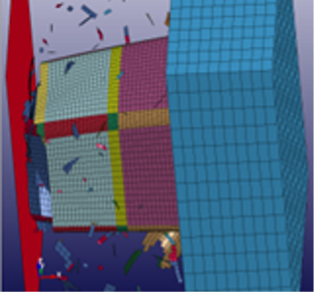
Explicit solution methods are commonly associated with highly nonlinear dynamic problems. They are able to solve problems containing severe discontinuities (for example impact or fracture) where implicit dynamic solvers would struggle.
-
![]()
Heat Transfer Analyses
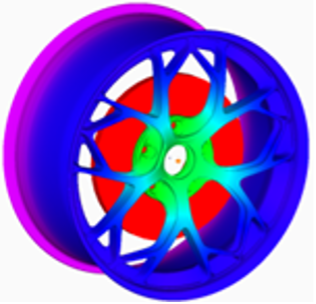
Heat transfer analyses are also possible using the Finite Element Method. They are useful in calculating temperature distributions to drive thermal expansion models when the compatibility between multiple components in an assembly must be considered, as well as predicting whether the temperature in a component will remain within acceptable levels over the course of a thermal loading. They can also help to guide in initial materials selection and optimisation.
Let's discuss your next project
Contact us today to explore how our composite engineering expertise can benefit your organisation